English

The Engineering Imperative for Zero-Leakage Fluid Transfer
In petrochemical refineries, active pharmaceutical ingredient (API) synthesis, and fine chemical manufacturing, the secure containment of hazardous fluids is a mandatory operational directive. Transporting highly concentrated acids, volatile organic solvents, and toxic reactive intermediates exposes fluid transfer equipment to severe chemical and mechanical stresses. Traditional dynamic sealing mechanisms, while functional in benign water applications, invariably experience wear over time. This degradation leads to fugitive emissions, environmental contamination, and severe occupational safety hazards. Formulating reliable process pump solutions requires transitioning from high-maintenance dynamic shaft seals to hermetically sealed static containment architectures. This technical document details the mechanical design, material selection, and system integration of sealless magnetic drive technologies to resolve chronic pump problems and solutions in aggressive industrial environments.
Why Dynamic Shaft Sealing Fails in Hazardous Service
The Vulnerability of Dynamic Mechanical Seals
Mechanical seals utilize a stationary ring and a rotating ring pressed together by mechanical springs. When pumping clean water, a microscopic fluid film lubricates these faces. However, when handling volatile solvents (which flash and evaporate rapidly) or crystallizing chemicals, this lubricating film fails. The seal faces experience dry friction, leading to thermal cracking and catastrophic seal failure. Highly corrosive media will also attack the metallic springs and retainers within the seal assembly. The definitive pump solution to this structural vulnerability is the complete elimination of the shaft penetration through the deployment of magnetic drive technology.
The Sealless Magnetic Drive Architecture
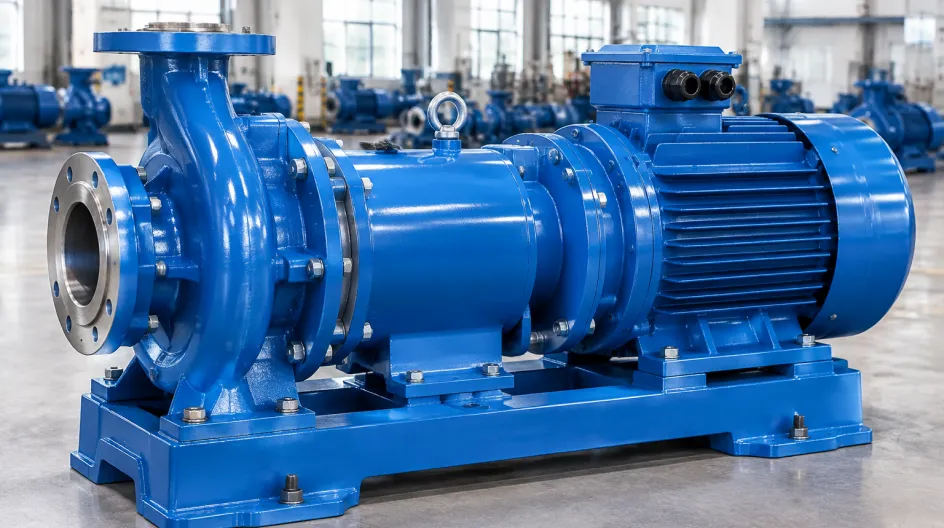
Magnetic drive pumps (such as the CQB and ZMD series) decouple the motor from the impeller physically, relying instead on a synchronous magnetic circuit to transmit torque. This architecture provides a hermetic barrier between the process fluid and the external environment.
Magnetic Torque Transmission Mechanics
A magnetic drive pump consists of an outer magnetic rotor connected to the electric motor, and an inner magnetic rotor embedded within the impeller assembly. A stationary isolation sleeve (containment shell) acts as a pressure boundary separating the two rotors. As the electric motor rotates the outer magnet, the magnetic flux penetrates the isolation sleeve and locks with the inner magnet, driving the impeller synchronously. Because there is no physical shaft penetrating the casing, the dynamic mechanical seal is entirely replaced by static O-ring seals. This static containment removes the dynamic seal as a leak path, fulfilling the strict requirements for pumping flammable, explosive, and toxic liquids.
Eradicating Eddy Currents with Non-Metallic Sleeves
In conventional metallic magnetic pumps, the rotating magnetic field generates electrical eddy currents within the metal isolation sleeve. These eddy currents produce significant thermal energy, which transfers directly into the process fluid. When handling liquids with low boiling points, this localized heat can cause the fluid to vaporize, inducing internal cavitation. Advanced industrial pump solutions utilize high-strength fluoroplastic isolation sleeves. Because fluoroplastics are electrically non-conductive, they eliminate eddy current losses in the sleeve. This prevents unwanted fluid heating and maximizes the electrical efficiency of the drive motor.
Internal Tribology: Silicon Carbide Plain Bearings
Because the inner rotor operates entirely within the hermetically sealed pump chamber, it must be supported by internal bearings submerged in the pumped fluid. These applications utilize highly pure Silicon Carbide (SiC) bearing assemblies. SiC offers extreme hardness, providing excellent wear resistance against trace particulates. However, these plain bearings rely strictly on the pumped fluid to generate a hydrodynamic lubricating film and to dissipate friction heat. Consequently, operating a magnetic drive pump completely dry is strictly prohibited and will cause rapid thermal shock to the ceramic components.
Material Science: Fluoroplastic vs. Stainless Steel
The longevity of a process pump solution dictates that the wetted materials must remain chemically inert to the specific medium under operational temperatures and pressures.
F46 (FEP) Fluoroplastic Alloy for Extreme Corrosives
For handling strong mineral acids such as 98% sulfuric acid, concentrated hydrochloric acid, hydrofluoric acid, and aqua regia, metallic pumps suffer rapid metallurgical degradation. The optimal solution utilizes a composite structural design. The pump features a heavy-duty cast iron or steel outer casing to withstand pipeline loads and internal pressures up to 1.6 MPa. The internal cavity is heavily lined with F46 (Fluorinated Ethylene Propylene, FEP) through high-temperature molding. This ensures the aggressive chemical only contacts the inert fluoropolymer, providing universal corrosion resistance without the high capital cost of exotic alloys like Hastelloy or Tantalum.
Austenitic Stainless Steel for High-Temperature Solvents
When transferring alkaline solutions, non-corrosive organic solvents, and oils at elevated temperatures, structural rigidity becomes the primary concern. The CQL and ZCQ series utilize investment-cast 304 or 316L stainless steel for the entire wetted path. Stainless steel offers superior mechanical resilience and dimensional stability, allowing safe fluid transfer at operating temperatures up to 180°C, where plastic linings might soften or warp.
Solving Specific Plant Geometry Challenges
Chemical processing plants frequently encounter spatial and layout constraints that standard horizontal pumps cannot accommodate. Tailoring specific equipment configurations is a core component of effective pump solutions.
Self-Priming Technology for Sump Evacuation
Evacuating hazardous waste sumps or unloading tanker trucks requires lifting fluids against gravity. Standard magnetic drive pumps require a flooded suction. Using submerged pumps in toxic sumps creates severe maintenance hazards, as operators must extract the contaminated pump for servicing. The ZMD magnetic self-priming pump integrates a gas-liquid separation chamber into the volute. After an initial manual fill, the pump can automatically evacuate air from the suction line and lift fluid up to 4 meters vertically. This allows the pump to be installed safely at ground level, combining the zero-leakage safety of a magnetic drive with the operational flexibility of a self-priming lift.
Vertical Inline Pumps for Confined Footprints
In modular skids and crowded pipe racks, floor space is severely limited. Vertical inline pumps (such as the GF/GDF series) feature suction and discharge nozzles on the exact same centerline. The pump installs directly into the vertical or horizontal pipeline like a standard valve. This eliminates the need for large concrete foundation blocks and complex piping reducers, drastically reducing the installation footprint while maintaining full fluoroplastic corrosion resistance.
System Engineering and Operational Safeguards
The mechanical reliability of sealless process pumps depends heavily on correct system integration and proactive operational safeguards.
Managing NPSH and Cavitation Prevention
A primary cause of centrifugal pump problems and solutions failures is cavitation. Cavitation occurs when the absolute pressure at the pump inlet drops below the vapor pressure of the liquid, causing the fluid to boil and form vapor bubbles. When these bubbles reach the higher-pressure zones of the impeller, they collapse violently, eroding the impeller blades and causing severe vibration. Plant engineers must ensure that the Net Positive Suction Head Available (NPSHa) in the piping system strictly exceeds the pump's Net Positive Suction Head Required (NPSHr). This involves minimizing suction pipe length, increasing suction pipe diameter, and preventing any upward bends that could trap air pockets.
Active Dry-Running Protection
Because the internal silicon carbide bearings of magnetic drive pumps require constant fluid lubrication, the system must be protected against dry running (e.g., if a supply tank runs empty or a suction valve is inadvertently closed). Comprehensive industrial pump solutions incorporate active electronic monitoring. Installing a motor power monitor detects the sudden drop in electrical load associated with a loss of fluid, instantly cutting power to the motor before the ceramic bearings overheat and shatter.
Evaluate Your Chemical Transfer Process
Addressing chronic leakage, mechanical seal failures, and rapid corrosion requires precision engineering matched specifically to your fluid dynamics. By transitioning to fluoroplastic-lined magnetic drive technologies, chemical facilities can achieve true zero-leakage containment, drastically reducing maintenance downtime and ensuring compliance with stringent environmental safety regulations. Our engineering team is available to map your specific flow, head, and chemical parameters to the optimal sealless pump configuration. Contact us to receive a comprehensive technical evaluation and a customized fluid transfer solution tailored to your plant infrastructure.
Frequently Asked Questions (FAQ)
1. What constitutes a reliable chemical process pump solution?
A reliable solution eliminates dynamic sealing vulnerabilities and material degradation. It involves selecting the correct wetted materials (like F46 fluoroplastic or 316L stainless steel) based on the fluid's corrosivity and utilizing sealless magnetic drive technology to guarantee zero fugitive emissions.
2. How do magnetic drive pumps solve common centrifugal pump problems?
The most common centrifugal pump problems involve mechanical seal wear and subsequent leakage. Magnetic drive pumps solve this by replacing the dynamic shaft penetration with a static isolation sleeve, transmitting torque magnetically. This eliminates the leak path entirely, offering a sealed containment boundary.
3. Are fluoroplastic lined pumps suitable for high-temperature solvents?
Standard F46 fluoroplastic linings handle continuous temperatures up to 100°C (and up to 150°C under specific structural designs). For highly volatile solvents at temperatures exceeding this limit, we recommend our stainless steel magnetic drive pumps (CQL series), which safely operate up to 180°C.
4. Can magnetic drive pumps handle slurries or solids?
Standard magnetic drive pumps are designed strictly for clean, clear liquids. The internal silicon carbide plain bearings and the tight clearance between the inner rotor and the isolation sleeve will suffer severe abrasive damage if solid particles are present. For slurries, our UHB-ZK steel-lined UHMWPE slurry pump is the required solution.
5. How do I prevent cavitation in my chemical pump system?
Cavitation is prevented by maximizing NPSHa. Keep the suction piping as short and straight as possible, use a pipe diameter equal to or larger than the pump inlet, and ensure the fluid temperature is monitored so its vapor pressure does not approach the suction line pressure.
6. What happens if a magnetic drive pump runs dry?
Dry running is catastrophic for magnetic drive pumps. Without fluid, the internal silicon carbide bearings lose hydrodynamic lubrication and cooling. The intense friction heat causes the ceramic to undergo rapid thermal shock and shatter within seconds. Active monitoring systems, such as motor power monitors or inline flow switches, must be installed to shut down the pump immediately upon fluid loss.
-

YFTEL Pumps
Fluid Engineers & Technical Support, YFTEL Pump
YFTEL is a chemical pump manufacturer based in Hangzhou, China, with a 26,000 m² production base in Hangzhou, China, with a 26,000 m² production base in Anhui. Using the CAS-patented Fluoroplastic Alloy material, we produce 300+ models of corrosion-resistant pumps, valves and piping, exported to 30+ countries.